Driving Precision: The Evolution of Plastic Part Manufacturing for Vehicles
Precision Injection Molded Automotive Components for Performance and Durability
Injection molded automotive components are the backbone of modern vehicle manufacturing, turning molten plastic into durable parts with incredible speed and precision. The process forces hot resin into steel molds under high pressure, creating everything from dashboard panels to engine bay covers in one seamless shot. This method yields lightweight, corrosion-resistant parts that can be complex or simple, all while slashing production time and material waste compared to traditional metal fabrication. For assemblers, these components snap together easily, cutting labor costs and boosting vehicle efficiency with every mile driven.

Driving Precision: The Evolution of Plastic Part Manufacturing for Vehicles
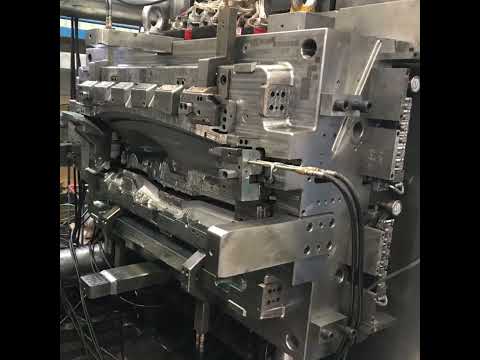
The quiet revolution under the hood began with controlling melt flow within the tool. Driving precision demanded tighter tolerances for injection molded automotive components, moving beyond simple trim to structural parts like intake manifolds and sensor housings. Mold designers now use conformal cooling channels to eliminate warpage, ensuring every part snaps into place without binding. Fiber-filled polymers require slower injection speeds to prevent orientation stress, a lesson learned after early dash panels cracked at highway speeds. Today, a single mold produces thousands of identical cam covers, each with micron-level gate vestiges, surviving extreme thermal cycles under the hood without fracture.
From Metal to Polymer: Key Shifts in Production Methods
The shift from metal to polymer in automotive production methods centers on replacing stamped or cast metal parts with precision-engineered injection molded components. This transition follows a clear sequence: first, designers replace multi-piece metal assemblies with a single molded polymer part, as seen in intake manifolds or cooling fans. Next, engineers select high-performance thermoplastics, like glass-filled nylon, to meet mechanical load and heat resistance requirements. Finally, integrated snap-fit and boss features eliminate secondary fasteners and welding steps. This method reduces weight by up to 40% while consolidating assembly steps.
- Replace metal sub-assemblies with single molded parts
- Select thermoplastics matched to under-hood or interior demands
- Design-in structural features to remove post-molding operations
Why Thermoplastics Dominate Modern Vehicle Construction
Thermoplastics dominate modern vehicle construction primarily due to their high strength-to-weight ratio for injection molded components, directly reducing fuel consumption without sacrificing structural integrity. Their ability to melt and reform repeatedly enables complex geometries like integrated clips, brackets, and ducting that consolidate multiple metal parts into a single mold, cutting assembly steps and production costs. Unlike thermosets, thermoplastics offer predictable shrinkage and excellent surface finish, critical for visible interior trim and exterior body panels. They also absorb vibrations better than metals, reducing NVH issues in dashboards and door panels. This cycle of lightweighting, part consolidation, and performance optimization makes thermoplastics the default material for injection molded automotive parts.
Core Material Choices for High-Performance Molded Parts

For high-performance injection molded automotive components, core material choices hinge on balancing thermal stability, impact resistance, and weight reduction. Reinforced thermoplastics like glass-filled PPA or PEEK are favored under-hood for their ability to withstand continuous high heat and aggressive fluids without creep. In structural body panels, long fiber-reinforced polypropylene offers a superior strength-to-weight ratio over standard materials. A common pitfall is selecting a material solely for peak temperature, ignoring dynamic loads.
The critical insight is that a 20% mineral-filled nylon may deform under sustained clamp load where a 30% glass-filled version would not, affecting part longevity.
For electrical connectors, PBT with low moisture absorption maintains dielectric properties, while impact-modified nylon is essential for crash-relevant trim brackets to prevent brittle shattering at low temperatures.
Engineering Resins for Under-the-Hood Demands
Under the hood, engineering resins must endure thermal spikes, oil contact, and mechanical vibration. Materials like polyphthalamide (PPA) and polyphenylene sulfide (PPS) maintain stiffness above 150°C, while glass-fiber-reinforced nylon resists creep under constant load from intake manifolds and thermostat housings. Selecting a resin with hydrolytic stability for coolant exposure prevents premature embrittlement in water-glycol circuits. **Why are PA66 and PPA preferred for turbocharger air ducts?** Both offer continuous service temperature ratings exceeding 180°C, with PPA providing superior chemical resistance to EGR condensation and oil mist.
Lightweight Composites and Their Role in Fuel Efficiency
Lightweight composites, such as carbon-fiber-reinforced polymers (CFRP) and glass-mat thermoplastics, directly reduce vehicle mass when used in injection molded parts like structural brackets and interior panels. This mass reduction lowers the engine load required for acceleration, thereby improving fuel efficiency by decreasing energy consumption per kilometer. Engineers select these composites for specific load-bearing components to replace heavier metals without sacrificing durability. The strategic substitution with lightweight composites allows automotive designers to optimize part performance while achieving measurable gains in miles per gallon over the vehicle’s lifespan.
Lightweight composites cut injection molded part weight, lowering engine energy demands and directly boosting fuel efficiency through reduced vehicular mass.
Surface-Finish Grades for Interior and Exterior Aesthetics
For interior and exterior aesthetics, surface-finish grades directly dictate how a molded part feels and reflects light. A glossy, mirror-like finish (SPI A-1) is often chosen for visible exterior trim to create a premium, high-end look, but it demands flawless tooling. For interior touchpoints like dashboard bezels, a textured matte finish (SPI C-1) hides fingerprints and glare while providing a soft-touch feel. Surface-finish grades for interior and exterior aesthetics also impact paint adhesion and durability—a too-smooth surface can fail on a bumpy road. Q: Which finish hides scratches best for daily use? A: A fine-blasted matte texture (SPI D-2) effectively masks minor scuffs on door panels.
Designing for Durability and Complex Geometry
Designing for durability in injection molded automotive components demands that complex geometry, like intricate ribbing or snap-fits, is optimized to withstand cyclic loads without stress fractures. A critical tactic is using draft angles and uniform wall thickness to ensure material flows evenly, preventing weak spots in intricate shapes. Q: How do you reinforce a complex bracket without adding weight? A: By using strategically placed gussets and fillets that redirect structural stress, not by thickening the entire part. Balancing this geometry with durable, impact-resistant polymers ensures the component survives vibration and thermal cycling under the hood.
Wall Thickness Uniformity and Warpage Prevention
Maintaining uniform wall thickness is critical in automotive injection molding to prevent warpage during cooling. Uneven sections cool at different rates, creating internal stresses that distort parts like dashboards or bumpers. Designers should specify consistent thicknesses, ideally between 2.0 and 3.5 mm for structural components. If variations are unavoidable, gradual transitions using radii or ribs stiffen the geometry without adding mass. Warpage prevention also relies on balanced gate placement and controlled packing pressure to ensure even shrinkage. How do ribs improve wall thickness uniformity? Ribs allow designers to maintain a thin, uniform nominal wall while adding local stiffness, reducing the risk of sink marks and warpage without thickening the entire section.
Incorporating Ribs, Bosses, and Snap-Fit Features
Ribs, bosses, and snap-fit features are integrated into automotive components to increase structural rigidity without adding wall thickness, which reduces material use and cycle time. Rib placement must follow stress flow lines to prevent sink marks, while bosses require gussets to withstand fastener torque. Snap-fit cantilevers demand precise undercut calculation and strain limits below the material’s yield point to avoid permanent deformation during assembly. These features collectively eliminate secondary fasteners, streamlining part consolidation. Designing for snap-fit compliance ensures repeated engagement cycles without cracking, critical for interior trim panels and under-hood enclosures where thermal expansion must be accommodated through living hinge geometry.
Gate Placement Strategies to Minimize Flow Lines
In injection molded automotive components, gate placement strategies to minimize flow lines prioritize locating the gate at the thickest wall section to promote uniform fill. This prevents premature cooling that causes visible streaks. For complex geometries, use multiple gates or a fan gate to reduce flow distance, thereby decreasing shear stress. A clear sequence is essential:
- Identify weld line risk areas using mold flow analysis.
- Place the gate opposite critical surfaces to allow flow front merging where defects are less visible.
- Incorporate a cold slug well immediately after the gate to trap initial chilled material.
This ensures laminar flow and consistent part aesthetics.
Key Applications Across the Vehicle Architecture
Injection molded components are deployed across the entire vehicle architecture, each zone demanding specific material properties. The powertrain relies on high-temperature-resistant molded housings for engine control units and intake manifolds, often using glass-filled nylon for dimensional stability. The interior compartment utilizes molded trim panels, dashboard carriers, and lightweight door modules that consolidate multiple functions into single parts. Exterior applications include painted body panels, mirror housings, and front-end modules that must withstand UV exposure and impact. Under the hood, complex fluid reservoirs and cooling fan shrouds are molded to manage chemical resistance and airflow. It is critical to select the injection grade specifically for the thermal and mechanical load profile of each architectural zone, rather than applying a universal material strategy.
Dashboard Structures and Center Console Components
The dashboard structure and center console rely heavily on injection molding for their complex, integrated forms. These components often use a multi-material approach, with a rigid, glass-filled nylon skeleton providing core strength for mounting the instrument cluster and infotainment screen. Softer, molded-in-place TPE or TPU skins create a pleasant tactile surface on the upper dash and armrests. The center console is a prime example of parts consolidation, merging the gear shifter trim, cup holders, and storage bin lids into a single, structural piece. This process ensures precise fit and finish for touchpoints, while also incorporating hidden clip features and seamless component integration for electronic modules.
Bumper Systems and Front-End Modules
Bumper systems and front-end modules rely heavily on injection molding to create lightweight, impact-absorbing structures that fit precisely under the skin of modern vehicles. Instead of heavy metal beams, you’ll find molded plastic fascias, energy absorbers, and carrier brackets that integrate sensors and cooling ducts. This approach simplifies assembly and cuts weight, which directly improves fuel efficiency. Injection molded front-end modules also allow designers to package everything from headlights to radar units in one tidy, drop-in unit.
- Energy absorbers are molded with crush ribs to dissipate impact forces
- Fascias use thin-wall molding for reduced weight without losing stiffness
- Single-piece carriers consolidate dozens of separate metal brackets
- Grille shutters and air ducts are molded directly into the module
Engine Bay Brackets, Covers, and Fluid Reservoirs
Within injection molded automotive components, engine bay brackets transition from metal to high-strength nylon or glass-filled polypropylene, directly reducing weight while maintaining structural integrity for alternator or AC compressor mounts. Covers, such as camshaft and fuse box lids, utilize precision-molded snap-fits for tool-free access and acoustic damping against vibration. Fluid reservoirs—for coolant, windshield washer, or brake fluid—demand chemically resistant materials plastic injection molding automotive parts like polypropylene or HDPE, with integral level markings and leak-proof welding. These parts consolidate multiple functions, replacing welded steel assemblies with single-shot molded units that resist under-hood heat cycling. Precision-engineered mounting points ensure exact alignment without rework.

Engine bay brackets, covers, and fluid reservoirs leverage injection molding to consolidate metal parts, improve thermal and chemical resistance, and integrate mounting features, directly serving under-hood durability and serviceability.
Interior Trim Panels and Door Handles
Interior trim panels and door handles are critical injection molded automotive components for cabin aesthetics and function. Trim panels, often large and contoured, are molded from materials like ABS or PP to match dashboard textures and provide acoustic insulation. Door handles require robust materials such as polyamide, ensuring repeated tensile and impact strength against daily use. Both parts demand precise tooling to achieve consistent color, grain, and tactile feel across vehicle interiors. Integration of features like handle release mechanisms or trim clip bosses is achieved through complex mold designs, eliminating secondary assembly steps.
| Component | Key Material Requirement | Primary Performance Focus |
|---|---|---|
| Interior Trim Panels | Low-gloss, moldable thermoplastics (e.g., TPO, ABS) | Surface aesthetics, NVH damping, dimensional stability |
| Door Handles | High-impact, UV-resistant polymers (e.g., PA, PC/ABS) | Cyclic fatigue resistance, ergonomic grip, latch durability |
Process Innovations Enhancing Production Speed
Injection molding for automotive components has been revolutionized by rapid cycle molding technologies, which integrate high-speed servo-driven clamping units and precision multi-cavity tooling. These systems slash part ejection times by synchronizing core pull sequences with simultaneous cooling channels. A key innovation, conformal cooling via 3D-printed inserts, eliminates hot spots and uneven shrinkage, enabling 30% shorter cycle durations on complex pillars or housings. Automated robotic demolding with end-of-arm tooling further accelerates throughput by removing parts in under a second without human intervention. Combined with closed-loop process control that adjusts injection rates in real-time, these advancements allow manufacturers to produce intricate dashboards or engine covers faster than ever, directly boosting output per shift without compromising dimensional accuracy.
Multi-Cavity Molds for High-Volume Output
Multi-cavity molds drastically accelerate production of injection molded automotive components by molding multiple identical parts per cycle. For high-volume output, these tools typically contain 2 to 128 cavities, balanced via flow simulation to ensure uniform fill pressure across all cavities. This design minimizes cycle time per part while maintaining dimensional consistency, critical for dashboard clips or connector housings. Optimized cavity layout reduces material waste and cooling time, directly boosting throughput without sacrificing part quality. Q: What limits cavity count in high-volume molds? A: Tool steel strength and cooling channel complexity—excessive cavities risk uneven filling or overheating, requiring precision machining to sustain production speed.
Gas-Assist and Two-Shot Overmolding Techniques
Gas-assist injection molding accelerates production of complex automotive components like door handles and dashboard carriers by using nitrogen gas to hollow out thick sections. This drastically reduces cooling time, material usage, and warpage, eliminating secondary machining for channels. Two-shot overmolding fuses a rigid substrate with a soft-touch TPE or thermoplastic in a single cycle, speeding up assembly for switches, grips, and seals. This simultaneous molding of distinct materials skips post-molding bonding steps. Cycle-time reduction is the core advantage, as both techniques eliminate extra operations, directly boosting line output.
Q: Do these techniques require separate tooling investments?
A: Yes. Gas-assist needs specialized gas injection nozzles and sealing controls, while two-shot demands a rotary or sliding tool platen to index the substrate for the second injection. The upfront cost is higher, but the per-part savings from faster cycles and eliminated secondary steps often justify the investment for high-volume automotive runs.
Cycle Time Reduction via Conformal Cooling Channels
Conformal cooling channels dramatically reduce cycle times for injection molded automotive components by following the part’s exact geometry, unlike conventional straight-drilled lines. This design eliminates uneven heat buildup, allowing faster, more uniform cooling. For complex parts like dashboard panels or headlamp housings, conformal channels cut cooling phases by up to 50%, directly shortening overall cycle duration. The precise thermal management prevents warpage and sink marks, meaning less time is wasted on rework or extended mold-open delays. Automotive molds equipped with these channels consistently achieve consistent sub-30-second cycles for thinner wall sections, boosting per-hour output.
Quality Control and Testing for Safety-Critical Parts
For safety-critical injection molded automotive components like airbag housings or brake boosters, quality control begins with validating mold flow simulation against real-world short-shot studies to detect knit lines or void risks. Each production lot undergoes non-destructive testing such as X-ray or CT scanning to certify internal integrity, paired with dimensional verification using coordinate measuring machines. You might wonder: *How often should test frequency ramp up for these parts?* Tightened sampling—often every 50th cycle for SPC charting—catches tool wear or material viscosity shifts before an entire batch becomes scrap. Destructive burst or tensile tests on sacrificial samples then confirm material strength meets crush or impact specifications. Color or gloss checks are irrelevant here; only precise, repeatable data from calibrated sensors matters for certification.
Dimensional Verification Using CMM and Optical Scanners
Dimensional verification for safety-critical injection molded automotive components relies on both contact and non-contact methods. A CMM (Coordinate Measuring Machine) provides high-accuracy contact probing for critical features like mounting bosses and sealing surfaces, though its point-by-point approach is slower. Optical scanners, such as structured light or laser line sensors, capture millions of points to create a full 3D model, enabling rapid comparison against the CAD nominal for global form deviations like warpage or sink. Integrating both systems ensures first article inspection validates all GD&T callouts while optical data highlights unintended distortion. Q: When should an operator use a CMM over an optical scanner? A: Use a CMM for verifying individual tight tolerances (±0.01 mm) on hard-to-scan internal features; use the scanner for comprehensive surface profile analysis and detecting shrinkage across the entire part geometry.

Impact and Thermal Cycling Tests for Longevity
Impact testing subjects injection molded components to controlled strikes, simulating debris or minor collisions to validate crack resistance. Thermal cycling abruptly shifts temperatures from extreme cold to high heat, replicating years of climate exposure. These paired assessments identify material fatigue, warpage, or bond failure before production. A part that passes both cycles often demonstrates broader durability beyond the test parameters. Results inform adjustments to wall thickness or resin selection for long-term structural integrity. Every cycle failure is analyzed to eliminate weak points.
Impact and thermal cycling tests ensure injection molded automotive parts withstand real-world physical shocks and temperature extremes without degrading prematurely.
Traceability Through Laser Marking and RFID Inserts
For safety-critical injection molded components, traceability through laser marking and RFID inserts provides an unbroken chain of accountability. Laser marking etches durable, high-contrast datamatrix codes directly onto plastic parts, surviving extreme heat and chemical exposure. A molded-in RFID insert stores a unique digital identifier, enabling contactless scanning through paint or dirt. This dual-layer approach ensures that even if a surface barcode is damaged, embedded RFID data remains accessible for verification. Complete part history from mold cavity to vehicle assembly is instantly retrievable when scanning these markers during quality checks or recalls.
Q: How do RFID inserts withstand the high-pressure injection molding process?
A: They are pre-encapsulated in protective polymer or ceramic housings that resist melting, allowing the reader to survive melt flow without function loss.
Cost Optimization Without Compromising Performance
For injection molded automotive components, cost optimization without compromising performance starts with design for manufacturability. By eliminating unnecessary material thickness and using ribbed geometries, you reduce part weight and cycle time while maintaining structural strength. Choosing polypropylene or recycled compounds can slash raw material expenses without sacrificing essential heat or impact resistance. Using conformal cooling channels in the mold cuts cycle times up to 30%, directly lowering per-part energy costs. Gate location optimization minimizes scrap and weld lines, preserving mechanical integrity. Mold flow analysis catches weak spots early, avoiding expensive rework. These practical steps keep interior and under-hood components reliable while trimming production expenses.
Material Selection Balancing Price and Strength
For injection molded automotive components, material selection balancing price and strength demands a precise evaluation of specific mechanical loads versus raw material costs. Engineers prioritize cost-effective alternatives like mineral-filled polypropylene to achieve stiffness without the premium of glass-filled nylon, while assessing impact resistance trade-offs for non-structural parts. A tailored approach uses high-strength materials only in high-stress zones, reducing overall part weight and cycle time. This granular optimization avoids over-engineering, directly aligning material spend with required durability.
- Evaluate filler content (e.g., talc, glass) to maximize stiffness per unit cost
- Conduct FEA to identify critical load paths for targeted reinforcement
- Specify unfilled polyolefins for cosmetic clips, while using PA66 GF30 for load-bearing brackets
Tooling Life Extension Through Advanced Steel Coatings
Applying advanced steel coatings, such as PVD or DLC, directly reduces cavity wear from abrasive glass-filled polymers, extending tooling life by up to 10x without altering part tolerances. This minimizes downtime for polishing and repair, slashing per-shot tooling cost. Cost per cavity cycle drops significantly when coatings prevent micro-cracking in complex geometry molds. Even a minor reduction in friction translates to fewer rejects over the tool’s lifespan.
- Nano-composite coatings block chemical corrosion from high-temperature resin outgassing.
- Multilayer diamond-like carbon maintains edge sharpness for 500,000+ cycles.
- Chromium nitride layers eliminate the need for mid-run lubrication stops.
Just-in-Time Inventory and Lean Manufacturing
Just-in-Time (JIT) inventory eliminates costly warehousing by synchronizing raw material delivery directly with the molding press schedule, reducing scrap from material degradation. Lean manufacturing targets non-value-added steps in the mold-change process, using standardized work to slash changeover times. This sequence ensures minimum batch sizes are economically viable:
- Analyze cycle times to determine precise material pull triggers.
- Implement single-minute exchange of dies (SMED) to drop changeover below ten minutes.
- Establish visual kanban signals for real-time part replenishment to assembly lines.
The result is reduced capital tied in work-in-progress while maintaining defect-free output to tight automotive tolerances.